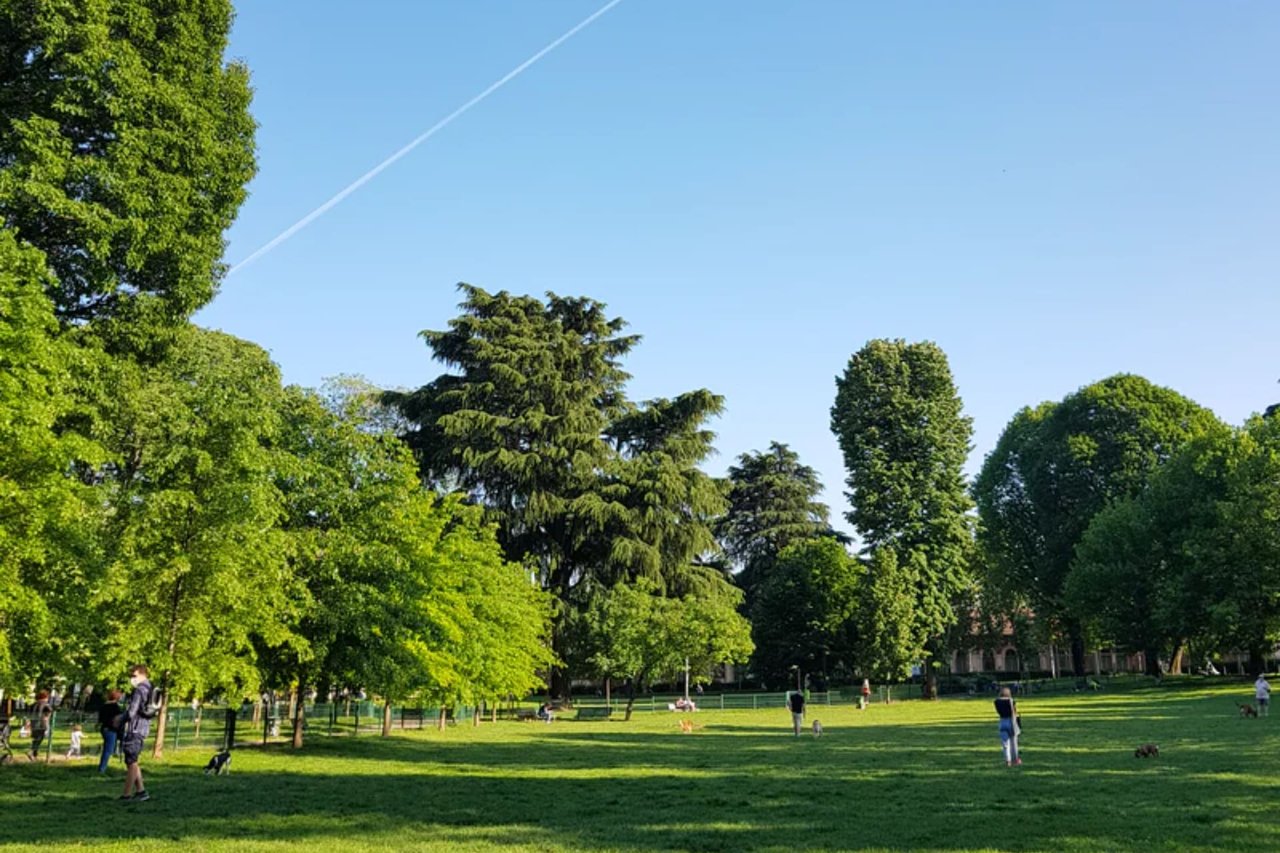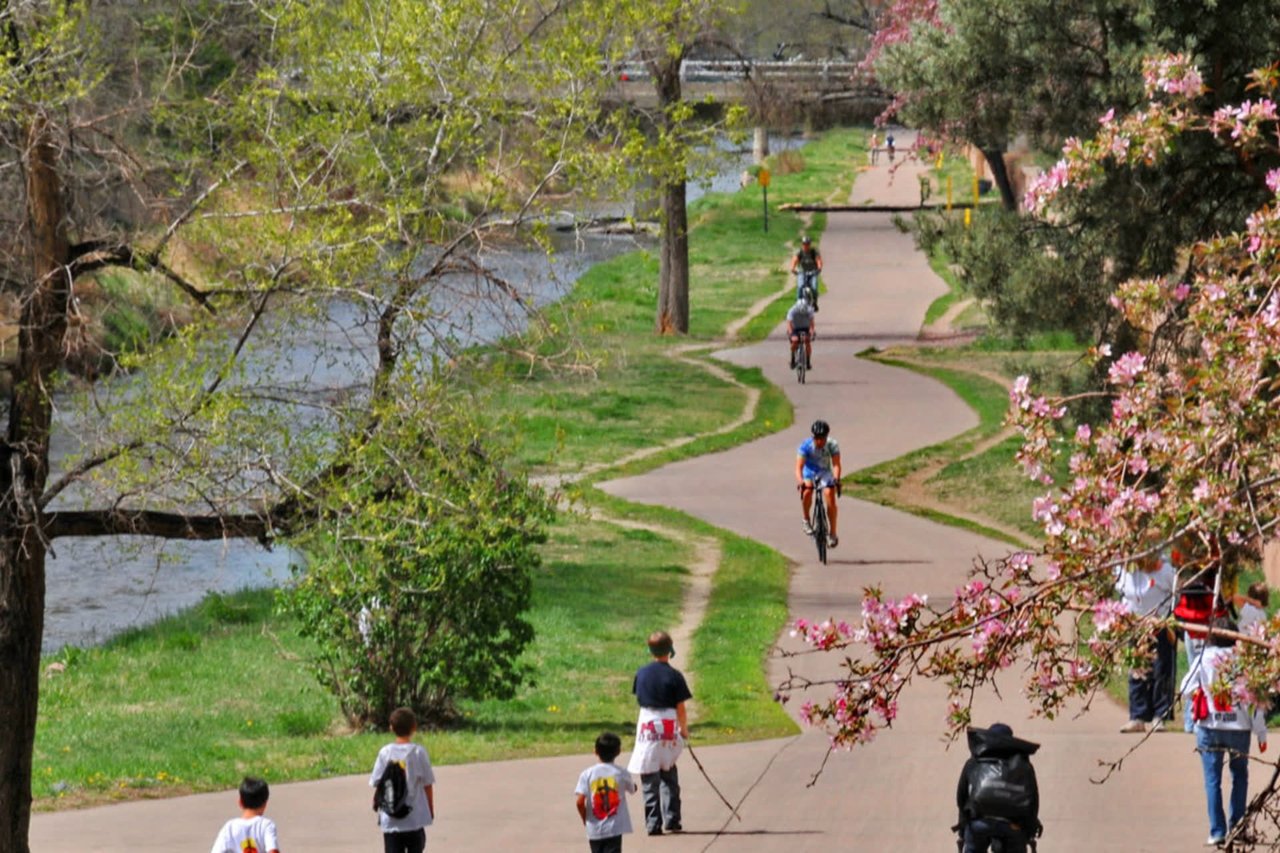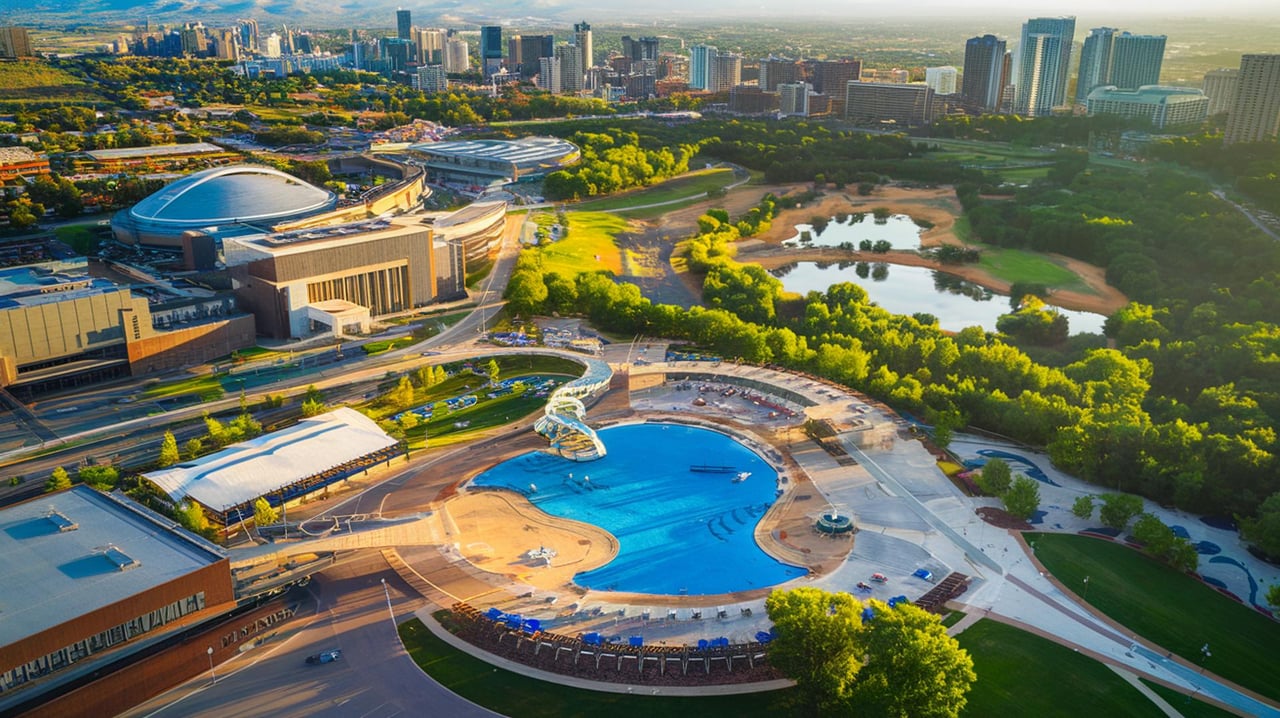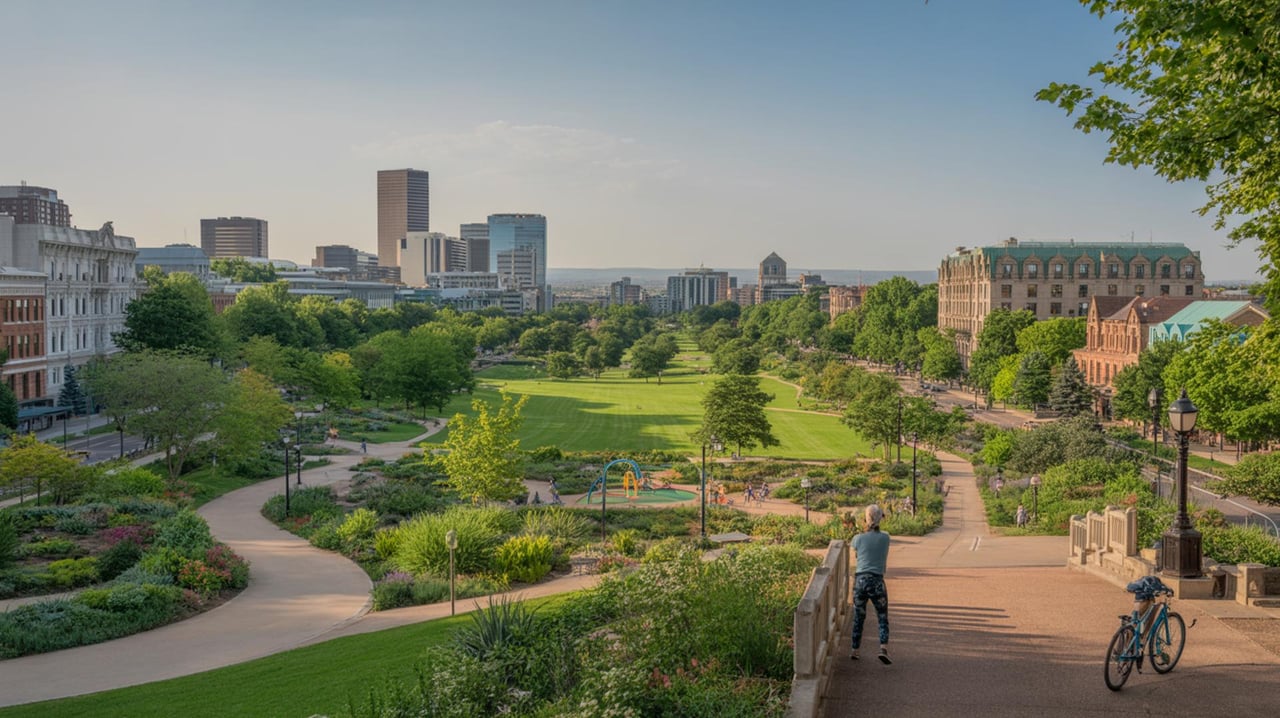
If you've walked the Meadow Loop this year, you've learned to step around it rather than through it. Orange plastic fencing has ringed sections of the asphalt path south of the Rec Center for months. Two of the picnic shelters have sat half-blocked since spring, gazebo roofs stripped for repair. A pair of tennis courts near the playground have been strung with caution tape instead of nets. None of this has been a mystery exactly, but nobody posted a single answer to the question everyone in the neighborhood has been asking on their morning loop: when does this end.
The answer, according to Denver Parks and Recreation's own project sheet, is this fall. Not next spring, not sometime in 2027. The same season you're reading this in.
What's Actually Torn Up Inside the Park
The work inside the park is a single $3,040,000 capital project funded through the city's Legacy Fund, its Department of Parks and Recreation capital budget, and the Elevate Denver Bond. Construction started in early 2026 and the city's own schedule lists completion for fall 2026, with the usual caveat that construction timelines slip. The scope is narrower than the fencing makes it feel: the asphalt sidewalks on the Meadow Loop south of the Washington Park Recreation Center and along the west side of South Humboldt Street are being resurfaced, Picnic Areas 1 and 4 are getting fireplace and gazebo repairs plus ADA accessibility upgrades, and the tennis courts nearest the playground are being rebuilt rather than patched.
That last detail matters if you play. The courts getting the full rebuild include:
- New court lighting
- New fencing
- ADA-compliant sidewalks to and around the courts
- New nets
- New court furniture, meaning benches and windscreens
Washington Park has ten lighted hard courts total, and the ones in this project sit at the north end near the playground, not the south courts where the Washington Park Tennis Club has run its USTA leagues and tournaments since 1965. If you've been driving to Congress Park or Cherry Creek to find an open court this year, the north courts are the ones that were closed. The club's south courts were never part of this scope.
| Project | Location | Status this fall |
|---|---|---|
| Meadow Loop resurfacing | South of the Rec Center, west side of S. Humboldt St. | Finishing on the city's fall 2026 schedule |
| Picnic Areas 1 and 4 | Inside the park, fireplace and gazebo repair | Finishing on the same schedule |
| Tennis courts near the playground | North end of the park | Being rebuilt with new lighting, fencing, nets |
| South Downing St. bike lane extension | Border of Washington Park and West Washington Park | Completed spring 2026 |
| East Dakota Ave. neighborhood bikeway | West Washington Park, Broadway to S. Marion St. | Completed fall 2025, still debated |
The Bike Lane That Closed a Real Gap
While the park itself was fenced off in sections, the street work around its western edge quietly finished ahead of it. Denver's Department of Transportation and Infrastructure completed an extension of the protected bike lane on South Downing Street this spring, part of the citywide Denver Moves: Bikes program. The practical effect is that the Exposition neighborhood bikeway, which used to dead-end at Downing, now connects across it to the broader network instead of dropping cyclists into unprotected traffic at exactly the kind of intersection where confidence matters most. Advocacy groups have described the connection as closing one of the more obvious gaps in a bikeway network that's historically been stitched together in disconnected pieces.
If your regular ride has always included a workaround at Downing, that workaround may no longer be necessary. It's worth testing on your next loop rather than assuming the old detour still applies.
The Fight One Block West
Not every piece of the last year's infrastructure work landed as quietly. According to a Westword report, DOTI installed five traffic circles along East Dakota Avenue in West Washington Park last November, connecting Broadway to South Marion Street as a new neighborhood bikeway, the same week it finished a similar bikeway along Emerson Street in Capitol Hill. The West Washington Park Neighborhood Association has since documented resident frustration, some of it dating back to an earlier fight over a proposed lane reduction on Alameda Avenue, where a petition with roughly 100 signatures pushed the city to revise its design while keeping the safety measures intact.
The Dakota Avenue rollout drew its own version of that friction. One resident said he'd learned about the project through a neighborhood newsletter and only vaguely remembered the survey behind it from years earlier. In the same Westword report, Denver Bicycle Lobby founder Rob Toftness defended the concept while noting its limits.
"Neighborhood traffic circles succeed in calming traffic. With Denver leaning in so heavily to what they call neighborhood bikeways, calmer traffic on these routes is a necessity for cyclist and pedestrian safety. Traffic circles can't really do it alone, though, and need to be paired with other solutions, like speed humps."
Other residents raised more specific concerns: a large service truck used by a local arborist that can no longer maneuver around the circles, and Royal Crest Dairy's delivery route, which runs down Dakota to start its rounds. None of that has reversed the project. The circles are still there, painted and in use, nearly eleven months after installation.
Why the Timing Actually Matters
Taken alone, any one of these projects is a maintenance footnote. Taken together, they describe something closer to a full calendar year of overlapping disruption around a single park, one that started with a contested bikeway in November 2025, moved through a bike lane extension that finished with comparatively little pushback this spring, and closes with the park's own sidewalks, picnic shelters, and tennis courts this fall. Three different city departments, three different timelines, converging on the same six-block radius inside the same twelve months.
That convergence is the part worth knowing, more than any single line item. If you've felt like Wash Park has been under some form of construction continuously since last fall, that's not an impression. It's been true. What changes now is that the pattern breaks. The Meadow Loop stops being something you route around. The two rebuilt courts near the playground go back into rotation with real nets instead of caution tape. The Downing Street connection, already finished, stops being a rumor and becomes just how you get across that intersection.
None of it required a ribbon-cutting, and none of it will get one. Denver Parks and Recreation's own materials warn that construction schedules are estimates, and a fall completion date can slide into early winter without much public notice. The more useful habit is checking the city's park projects page before you assume anything is done, rather than waiting for a sign to come down.
If you've been meaning to walk the full Meadow Loop again, or get back on the north courts, or test whether the Downing Street connection actually smooths out your ride, this is the season those questions get answered on the ground instead of on a project sheet.
If you're the kind of Wash Park regular who tracks this stuff because you like knowing your own neighborhood better than the apps do, that instinct is worth something beyond a better morning loop. Alex Rice keeps the same kind of close watch on what's actually changing in Cherry Creek, Wash Park, and Polo Club, the kind of detail that never makes it into a listing photo. Start Your Home Journey whenever you're ready to talk about what it means for the neighborhood you already know.